


Newsletter Circle is your go-to source for building a successful newsletter business.
📣 Quick Announcement: I’m on YouTube!
I always wanted to say, “Welcome to my channel,” and now I finally can. Newsletter Circle is officially on YouTube. :)
Starting a new channel from zero is its own adventure, but I’m all in and plan to build it in public. I’ll continue hosting live sessions on Substack and will upload the replays to YouTube. Alongside those, you can expect plenty of actionable videos, deep dives, and tutorials to help you grow your Substack even stronger in 2026.
I’m already working on my first video, which goes live next week. It feels exciting to begin this new chapter and I’d really love to have you with me on the journey. Let’s go!
I’ve been watching something interesting happen on Substack lately. More and more fiction and non-fiction authors are launching newsletters not just to share their writing, but to support the entire journey of publishing a book. They’re serialising chapters, gathering real-time feedback, building an audience early, and creating momentum long before launch day.
This trend made me curious.
Why is Substack becoming such a powerful tool for authors?
And how does it actually influence the way books get written, marketed, and sold?
To find answers, I sat down with Fleur Hull, an author of two bestselling non-fiction books and a book marketing strategist with more than twenty-five years of experience. She also runs The Substack Bookstore, a fast-growing hub where indie authors can list their books and reach a targeted community of readers.
We talked about
How self-publishing works today
The realities behind book marketing
How authors can use Substack strategically to support their writing and publishing goals.
You can watch the full conversation in the video above. If you’re short on time, I’ve pulled together the key takeaways for you below.
If you’re thinking about publishing a book at some point, this conversation is full of insights worth keeping.
1. Self-Publishing Has Never Been Bigger
Fleur broke down the publishing landscape into three main routes, each with its own expectations and trade-offs.
1. Traditional Publishing: The Dream Path for Many
When most people think about publishing, they imagine the big houses like Penguin, Random House, or Simon & Schuster. Getting published by one of the “Big Five” publishers is still a dream for many authors, but Fleur reminded us how long and competitive the process is.
You first need to convince a literary agent to take you on. That agent then shops your manuscript to multiple publishers, often over months or years. If you’re selected, the publisher pays you an advance, sometimes a modest amount for debut authors, sometimes millions for high-profile memoirs.
It’s a really long and competitive process.
2. Self-Publishing: Full Control and Full Responsibility
Since traditional publishing is getting more and more difficult, self-publishing has exploded. In an average week, 70,000 books are published on Amazon in the US alone.
Authors choose it for different reasons: creative control, faster timelines, ownership of rights, or simply because traditional publishing doors remain closed.
The upside is they keep most of the revenue and have full creative control.
But with that freedom comes responsibility. Self-published authors handle everything: editing, cover design, marketing, launch strategy, and long-term promotion. Some hire help. Others learn as they go.
3. Hybrid Publishing: Opportunity or Red Flag
Between traditional and self-publishing sits hybrid publishing. Some hybrid publishers operate like small independent presses, offering production and marketing support for a reasonable fee.
But Fleur warned that others function more like vanity presses, promising big results, charging authors thousands of dollars, and sometimes failing to deliver anything meaningful in return. Some even pressure authors by claiming their book was “selected” or hinting at film deals.
Her advice was straightforward:
If someone approaches you out of nowhere with a “deal,” proceed with caution. A legitimate publishing partner will never take your rights away or demand large upfront payments without clear deliverables.
2. Why So Many Self-Published Books Sell Under 100 Copies
The biggest misconception about self-publishing is that you can write a book, upload it and it will somehow take off on its own.
This was one of Fleur’s most striking insights: 81 percent of self-published books sell fewer than 100 copies.
And it’s not because the books are bad.
It’s because the authors didn’t have a solid marketing strategy.
Most writers want to write, not market. But even traditionally published authors these days handle their own marketing, book tours, newsletters, and social content. Unless you’re Stephen King, you will be expected to show up for your book.
In other words, the writing is only half the work. The rest is building the audience who will buy it.
3. How Substack Supports Authors at Every Stage of the Book
Fleur sees Substack becoming increasingly important in the author ecosystem.
Although it might change depending on your goals, Fleur’s advice was starting a Substack to start your book project. The earlier you begin, the more momentum you build. Having a Substack is critical for two reasons:
1. You can build the book in public
Many authors now:
share early chapters
serialise parts of their book
gather feedback from readers
use their audience to find beta readers
recruit early reviewers for launch day
This feedback loop helps shape the final manuscript and creates early buy-in from readers who feel part of the process.
2. You can build an audience ready to buy
A Substack audience is an author’s foundation:
You have direct access to readers through email.
You’re not dependent on algorithms.
You can talk about your book during the months (or years) leading up to launch.
Publishers increasingly look for authors with their own platforms.
4. The Risk of Sharing Serialized Chapters on Substack
While many authors use Substack to share early chapters and build their books in public, Fleur highlighted that this approach comes with real risks. It can be powerful for gathering feedback and understanding what resonates, but it isn’t always the right strategy for everyone.
She explained two key concerns:
1. Traditional publishers may be less interested if the work feels “already published.”
If large parts of the book have been shared publicly, some publishers might hesitate unless the author is generating huge engagement. In those cases, strong social proof can outweigh the concern, but it’s not guaranteed.
2. You may lose buyers who feel they’ve already read the book.
When readers follow a serialized version over several months, they might not purchase the finished book because the content feels familiar. Even if the final manuscript is polished and expanded, the perceived overlap can reduce launch-day sales.
Because of this, Fleur emphasized the importance of balance.
Authors need to be strategic about how much they reveal, how often they publish drafts, and how they use reader feedback without giving away the entire book.
Her suggestion was not to avoid serialization altogether, but to do it intentionally.
Share just enough to engage readers and shape the book, while protecting the value of the final product.
5. The First Step Every Author Should Take: Audience Analysis
Before writing a book or launching a Substack, Fleur recommends one crucial step:
Know your audience deeply.
That means going beyond demographics and asking:
What this reader wants
What motivates them
What psychological factors drive their purchasing
Which competing books shape their expectations
Who else serves this niche and how
Understanding your audience informs everything: your positioning, your tone, your collaborations, your book’s angle, and your growth strategy on Substack.
Without this clarity, even the best marketing tactics won’t land.
6. How Authors Can Grow on Substack
Most growth principles apply to all creators, but Fleur emphasised the basics:
Engage generously
Leave thoughtful comments
Collaborate with other writers
Be consistent
Learn from creators in your niche
Show up on other platforms where your audience hangs out and drive to your Substack
And one feature stands out:
Substack Notes.
Notes continues to be one of the most effective ways to get discovered, especially when you combine posting with genuine engagement. But Fleur also acknowledged that it takes time. Consistency, thoughtful contribution, and accountability make all the difference.
7. Inside The Substack Bookstore: A Home for Indie Authors
The Substack Bookstore isn’t a typical newsletter. It’s a curated directory where indie authors list their books, link directly to their sales pages, and reach a community of readers actively browsing for new titles.
There are three participation levels:
Free subscribers: One free listing
Annual subscribers: Listing up to three books and they get priority listings and a longer description.
Foundation tier: Featured placement and a bestseller campaign.
The bestseller campaigns reach more than twenty thousand readers across Fleur and Kristina God’s audiences. The idea is to try and drive a best-selling Amazon category number one for the authors and get sales towards that.
Another fascinating insight: Fiction books get about 70 percent more engagement than nonfiction titles in the Bookstore.
Today, the directory includes more than 250 authors and hundreds of books. Almost everyone who visits clicks into at least one listing. That means discovery is genuinely happening.
8. A Book Launch Success Story: “Gutter to the Stars”
There are many bestsellers emerging from The Substack Bookstore, like Decode Your Diagnosis by Paul Cobbin and Happy Habits by Gunnar Habitz.
One of Fleur’s favourite stories is Latimer Redlance ( Obsidian Blackbird. ), author of Gutter to the Stars, a gritty Gen X memoir.
With a relatively small but highly engaged and loyal Substack audience, he:
• hit number one in his category on Amazon
• outsold memoirs by major musicians
• received more than twenty reviews within days
• built strong momentum right from launch week
Fleur worked with him closely: cover testing, uploading to Amazon and IngramSpark, a full marketing plan, content ideas for Substack and Instagram, and a press release reaching ten million people.
Having around 1,000 subscribers at the time of launch, his story proves something powerful:
You don’t need a huge audience. You need the right audience.
9. Closing Advice for Newsletter Creators
Fleur’s final message was simple and relevant to all of us building online:
Show up with a generous spirit. Give before you expect to receive.
From a practical standpoint, she added one more tip:
Have a strong Notes strategy.
Consistent participation on Notes remains one of the most reliable ways to grow on Substack today.
10. A New Resource Coming Soon for Substack Authors
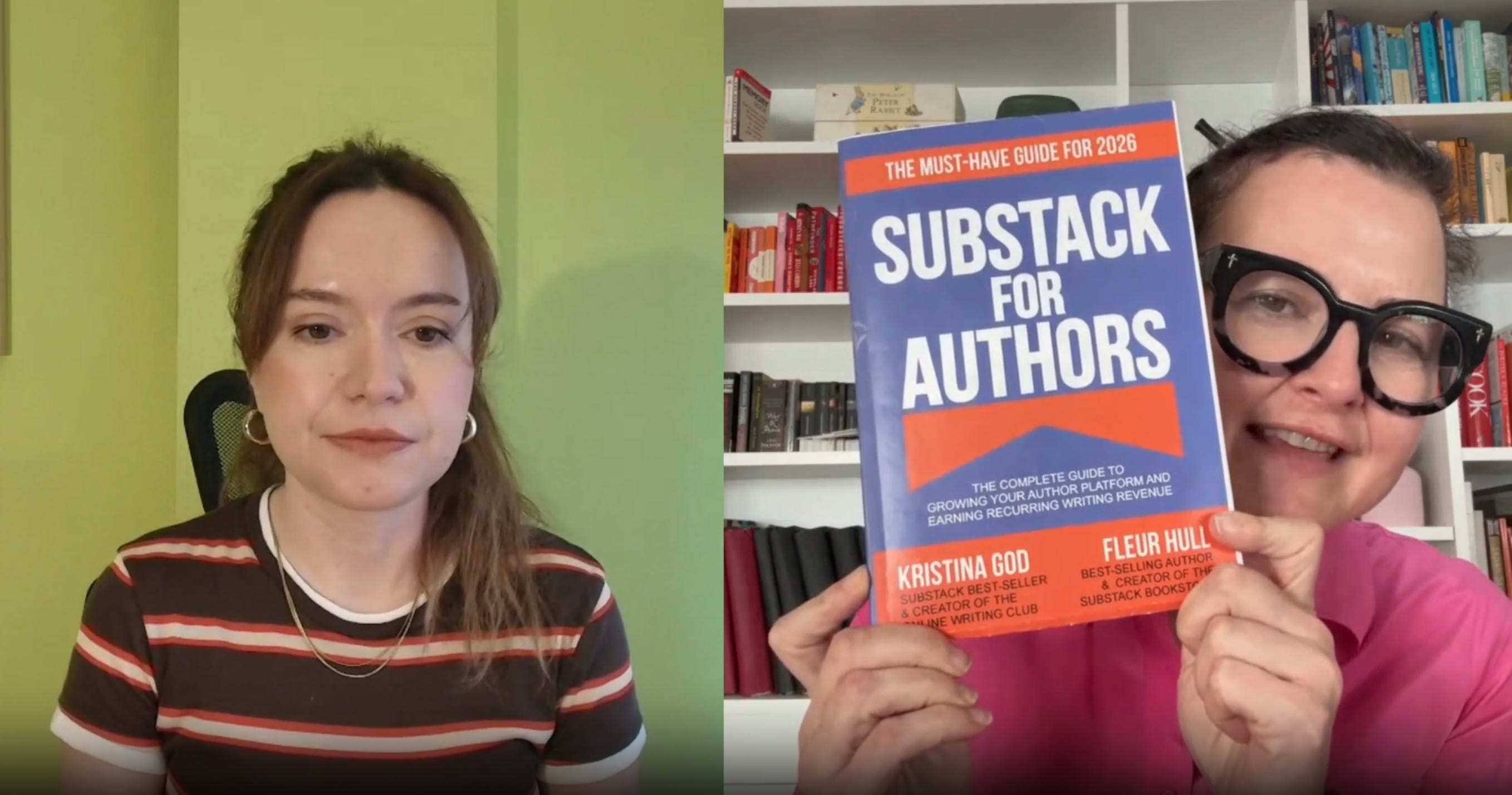
Before we wrapped up, Fleur shared one more exciting update. She and Kristina God are co-authoring a book specifically for Substack authors. Their goal is to create a practical, interactive guide that helps writers navigate the platform and make it work for their long-term goals.
When it comes out, it will be one of the first dedicated resources built by two creators who deeply understand both Substack and the needs of indie authors.
If you’re planning to use Substack as part of your publishing strategy, this will be a book to keep on your radar.
Wrapping Up
Talking to Fleur made one thing very clear. Writing a great book is only half the journey. The real leverage comes from understanding your audience, building momentum early, and treating your book like a long-term project rather than a one-day launch.
Substack gives authors a rare combination of tools: a place to write in public, gather feedback, build meaningful relationships with readers, and create a launchpad that doesn’t depend on algorithms. Used thoughtfully, it can become one of the strongest assets an author has.
If you’re considering writing a book, or already working on one, I hope these takeaways help you approach the process with more clarity and confidence.
A huge thank you to Fleur Hull for joining me. You can also find her on Facebook, Instagram, TikTok, YouTube and LinkedIn.
If you want more conversations like this, insights from creators, and practical strategies for building your Substack, you can subscribe to Newsletter Circle and drop your questions in the comments.
I’d love to hear where you are in your own newsletter journey and what you’re building next.
Thank you for reading and see you next week.
Ciler
Find me on Substack Notes & LinkedIn


